Welcome to our ‘Fund in Focus’ series where we profile our member funds, underscore their investment philosophy, and highlight some of their interesting work. Today we speak to Ramesh Kannan , Senior partner, Somerset Indus Healthcare Fund - a distinguished private equity firm, showcases its commitment to revolutionizing the healthcare landscape in India. With a laser focus on healthcare, their investment strategies are strategically aligned with three core sectors: Hospitals, Diagnostics, and Labs; Pharmaceuticals and Life Sciences; and Medtech Manufacturing. Somerset Indus stands out from competitors by emphasizing conservative valuations, exclusive partnerships with promising promoters, and meticulous post-investment support. Their success stories include enabling accessibility to critical healthcare services in underserved regions, fostering innovation in medical technology, and driving sustainable impact through adherence to environmental, social, and governance standards.

FUND IN FOCUS: Somerset Indus Healthcare Fund - Leading the Charge in Indian Healthcare Investments
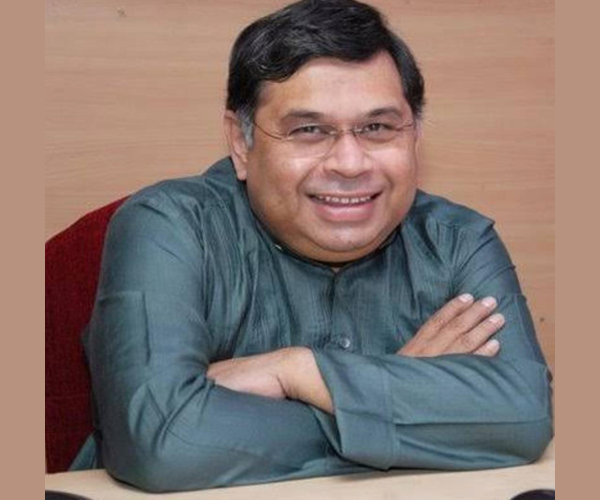
Spokesperson: Ramesh Kannan, Senior partner, Somerset Indus Healthcare Fund
1. Could you provide insights into Somerset Indus Healthcare Fund’s investment focus within the healthcare sector in India?
Somerset Indus healthcare fund focuses exclusively on healthcare, we have completed two funds and right now engaged in raising $250mn for our fund III. We invested in seven companies from our Fund I and another set of seven companies from our fund II.
Fund I saw investments in – Sandor Medicads (ICU distribution), Krsnaa Diagnostics (PPP diagnostics), Ujala Hospitals (in tier II and III cities), Browndove (renal care consumable company), Prognosys (manufacturer of medical equipment), (renal care consumable company), Chaya Graphics (medical consumable distribution), (renal care consumable company), Hexagon Nutrition (research-oriented organization engaged in formulating, nutraceutical products).
Our fund II saw us investing in Genworks (medical equipment and consumable distribution company focused on tier 2 and tier 3 cities promoted by GE and Wipro), Apex Hospitals (a hospital in Jaipur growing), Globela Pharma (a Pharma formulation company getting into API), Sterling Hospitals (oncology hospital chain into tier 2 and tier 3 cities), EMIL Pharma (a pharmaceutical formulation- generic products focused in Latin American markets), Natural Biogenex (hormones and steroids), Printmann (pharmaceutical packaging with technology as a key component)
Essentially Somerset operates in 3 buckets:
- Hospitals, Diagnostics and Labs
- Pharmaceuticals (including API) and Life Sciences
- Medtech including manufacturing
The last bucket is an assorted one which includes biomedical services, nutrition’s manufacturing, preventive care etc.
2. What sets Somerset Indus apart from other private equity firms operating in the Indian healthcare space?
In today’s context money is available everywhere and plentiful too. Valuations are high in many cases, money gets used indiscriminately to garner revenue and market share and funds are competing to get investments resulting in a valuation war.
Somerset operates at a different level. Its valuation is conservative, it does not participate in auctions, if it likes the promoters and the business, it seeks exclusivity. We work together with the promoter in building the business plan. We are open to offering a clawback if the promoters perform and ultimately it provides value, thanks to the domain expertise it offers. In addition, we help our investee companies finding the right people at CXO level to pursue business opportunities. The fund also helps in identifying targets for acquisition, and bringing on board foreign director from our LP’s to provide a global perspective to the portfolio company. In addition there are lot of emphasis in monitoring, course correction, and a strong reliance on compliance, governance, MIS, reviews etc. So ultimately even in spite of a conservative valuation companies come to us because of the sheer value we create resulting in higher valuation in the future.
3. How does Somerset Indus plan to utilize the capital commitment from domestic institutional investors for its third private equity fund, and what are the fund's growth expectations and timelines?
Fund III is a $250mn fund, with marquee investors from the domestic as well as global markets. We expect to raise the fund by the end of this year with multiple closures beginning two months from now. All our investors are very impressed with our performance and focus on developing and building a very robust healthcare system in India.
We will continue to invest in healthcare only and considering increase in the requirement of the portfolio companies for growth, expansion, diversification, and acquisition we also have co investment rights with select LP’s.
On our own we can invest up to $25mn per investment and seek co-investment as required if the asking amount is more. We will continue to do seven more investments from this fund.
We believe that in line with the performance of Fund I where we will exit 100%, no loss, very good IRR, DPI and MOIC, the trend will continue in fund II and in fund III as well
4. How does Somerset Indus evaluate potential investment opportunities in healthcare delivery product and service platforms? What criteria do you prioritize?
Our fundamental and most important criteria is the promoter. We spend a lot of time in understanding and providing support to promoters even prior to investments to get a perspective on how they act or operate. For us a good promoter and a bad business can be rectified and not the other way around.
The second criteria is integrity and compliance, governance and the ability to adhere to ESG norms. We are extremely particular about these factors and these are sacrosanct. Third, we understand very clearly the way forward both in terms, merger and acquisitions and exit - this is extremely important to avoid any misunderstanding later.
We do not invest in health-tech and invest only in healthcare and require both top line and bottom line with a robust PBT and a potential to expand and grow both within and outside the country
In Fund III, we want to invest in a oncology equipment manufacturing company, oncology service provider, diagnostics and some Pharma initiatives like excipients etc.
5. Can you share examples of successful investments Somerset Indus has made in the past, and how they have contributed to improving healthcare accessibility and affordability in India?
- Sandor Nephro, a network of dialysis delivery providers helped in dialysis centers being taken to tier 2 and tier 3 cities resulting in dialysis being available closer home, this enabled multiple chains both domestic and overseas to come and change the horizons of Indian healthcare in the renal care space.
- Krsnaa Diagnostics which believed in the power of PPP, working together with the government to setup diagnostic centers all over the country and providing services at half the price charged by private players did not find any takers. But we invested, supported got in more investors built the company and finally took it public. It was a spectacular proof of the pudding.
- Browndove was into dialysis space – consumable. Until Browndove came up, all the requirements were imported and the dialysis machine maker had a say in the consumable bought by the dialysis service provider. We invested to create a local manufacturing capability and offer products at a very affordable price. Today Browndove is a very valued and respected brand for its quality and price.
- Prognosys was at a time when digital medical equipment was imported at very high cost and affordability existed only with the government. Prognosys enable manufacturing of digital x-ray and c-arm and totally changed the market with more and more private player in addition to government buying the products which was very high on quality and affordable on price.
- Genworks, wherein the company focused on taking the best brands, technology coupled with connected care to tier II and tier III markets, was a game changer. The impact and the effect of taking healthcare to where the people deserved it the most, replacing pre-owned machines with new machines, opex model wherein you don’t pay for capex but pay for opex etc., changed the course of medtech, today from a capital equipment supplier to consumable supplier to a technology provider and finally a service provider in connected care is changing the phase of Indian healthcare system.
- Apex hospital helped in healthcare moving from the state capital to district headquarters and Rajasthan proved a point where all the brands were concentrated in Jaipur and Apex hospital took healthcare beyond Jaipur and built hospitals in the district headquarters. Added to this it enabled tele –ICU services resulting in huge benefit to the patients including saving lives.
- Sterling Hospital an oncology service providing hospital chain, again focused on interiors of Gujarat is making a difference to patients.
One very important outcome of all these investments is availability of quality healthcare, coupled with technology at affordable cost in interior India.
6. Given the evolving landscape of the Indian healthcare sector, how does Somerset Indus adapt its investment strategies to seize emerging opportunities and mitigate risks?
Healthcare luckily has been a robust sector and growing because of an increasing population requiring high quality care. Five years back healthcare was grossly underserved and available in capital cities only.
Now healthcare is spreading beyond state capitals and this is helping rapid growth coupled with build-to-design hospital, leasing of brown field projects, Propco and Opco Business Models, Opex financing of medical equipment’s, technology both enterprise and business, increasing tele health facility, more and more medical equipment manufactured in India etc., are propelling growth.
On the other side, global players are coming to Indian healthcare in a big way in acquiring, consolidating, aggregating healthcare to enable scale and size. This opportunity for mergers and acquisitions is growing rapidly and has attention of the global player.
So looking at Somerset, it is very much aligned to the growing needs of the market and concentrating on both the opportunities and the possibilities of building more platforms resulting in them going public.
Being conservative and cautious with an optimistic outlook, backed by very strong domain knowledge of the partners , picking and choosing promoters very carefully, sticking to a single vertical (healthcare) having investors supporting the initiatives and the partners actively involved in supporting promoters to realise their ambitions mitigates potential/possible risks
7. Could you elaborate on Somerset Indus' approach to sustainable impact-based investing and its efforts to create positive environmental, social, and governance impacts?
Somerset is very much focused on ESG and all its confirmations are with international bodies like IFC, ADB, Morgan Stanley and Domestic investing institutions like NIIF among others. We are extremely compliant on ESG both from a fund and portfolio companies.
One of the most important factors while investing is the potential impact each of the investment creates and benefits for both the society and the patients. Be in compliance, governance, statutory, approvals, permissions etc. there is a 100% adherence and compliance. Additionally be it equal opportunity, pollution, water, electricity, etc., etc., it is much focused to meet all requirements
From a patient’s perspective the products and services make a difference in terms of the outcome, availability, accessibility and affordability. The portfolio companies work very closely with the Government and CSR partners including NGO’s to take healthcare closer to the customer. The latest technology resulting in connected care, products which can be operated by paramedics and the report generated from anywhere in the world, thanks to connected care is standing proof of success.
Tele-Cardiology, Tele-Nephrology, Tele-NICU, Tele-ICU, Tele oncology, tele audiology etc., really help in the preventive care scenario where in patients are detected early and treated early saving huge amounts in the bargains. Somerset has also published reports on impact and sustainability where our portfolio companies are making a difference to mankind. Click here to access the recent report.