Welcome to our ‘Fund in Focus’ series where we profile our member VC funds, underscore their investment philosophy, and highlight some of their interesting work. In this edition, Shveta Ravi, Managing Director, Arali Ventures at Arali Ventures, shares how the firm builds conviction at the idea stage, why Indian founders are uniquely positioned to create global B2B and SaaS leaders, and what early-stage investing has taught them about patience, capital discipline, and distribution. From lessons across Fund I exit to the sharper ownership-led approach of Fund II, Arun outlines Arali’s long-term view on enterprise technology and vertical AI.

FUND IN FOCUS: Building Early Conviction in Enterprise Tech: Arali Ventures on Founders, Focus, and the Long Game
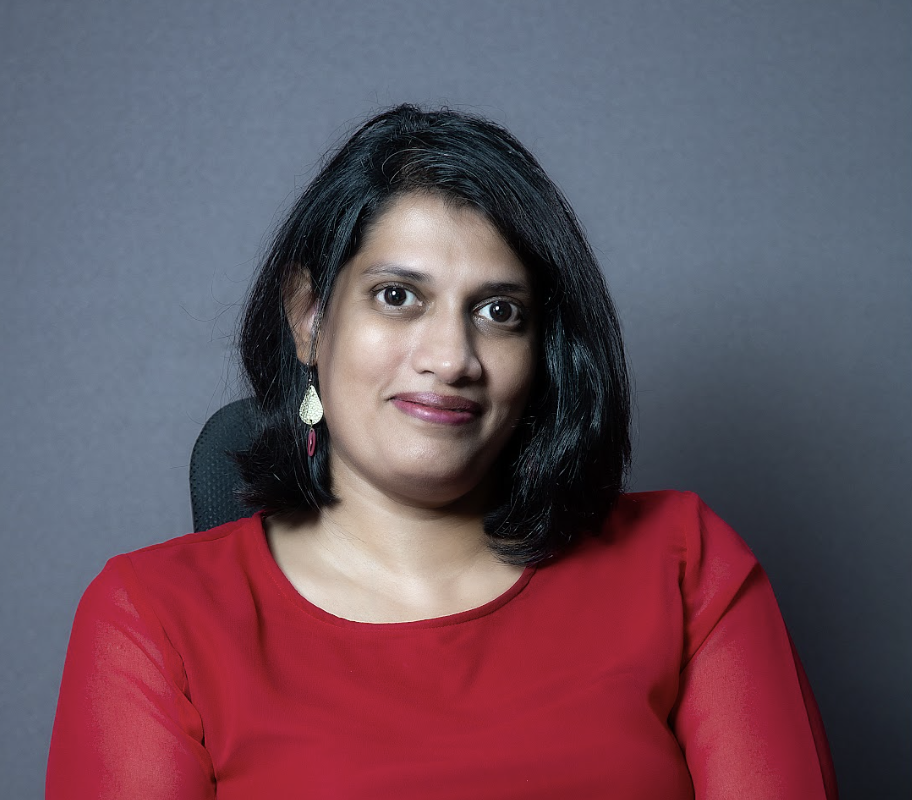
Spokesperson: Shveta Ravi, Managing Director, Arali Ventures
1. Arali is known for its belief that it is never too early to engage with founders. How do you evaluate conviction at the pre-seed or idea stage, especially when most portfolio companies are pre-revenue at entry?
Our conviction framework extends beyond early founder signals to a broader, ecosystem-level view of the opportunity. Founders remain central—we look for deep problem ownership, clarity of thought, the ability to adapt quickly while being ready for the hard grind—but we pair this with an assessment of potential market size, urgency, and problem priority. Even at the idea stage, we ask whether the problem is large, persistent, and important enough to support a venture-scale outcome, and whether it is a clear customer priority today or soon.
Our founder discussions help stress-test assumptions around adoption cycles, buyer behavior, budget ownership, timing, and competitive context, including how incumbents and emerging players are approaching the space.
A good example of this approach is FinBox. When we started engaging with FinBox, the digital lending industry was in its nascent stages. However, the founders had deep, first-hand insight into credit decisioning and gaps in India’s lending infrastructure. Parallel validation with lenders, fintech operators, and our LP network reinforced our conviction that an infrastructure solution would have long-term potential and opportunity.
2. You focus on B2B and enterprise-facing businesses built from India but often serving global markets. What structural advantages do you believe Indian founders bring to global B2B and SaaS categories today?
Indian founders building global B2B and SaaS companies bring distinct structural advantages.
India’s services and GCC ecosystem provides us a huge pool of talent that has got deep domain, engineering skills to solve global problems. This talent pool has high quality understanding of industry nuances and current gaps in the technology landscape, deep engineering skills to build high-quality software at scale while keeping costs efficient, supporting earlier profitability.
Indian entrepreneurs tend to be highly capital-conscious, with disciplined approaches to product development and prioritization—qualities that are critical for enterprise businesses with long sales cycles.
Indian tech ecosystem has had a long history of catering to both local and global customers, this equips founders with nuanced go-to-market understanding and adaptability, allowing them to design solutions that work across diverse geographies and enterprise segments.
3. At the pre-seed and seed stage, Arali often helps shape ideas into offerings that achieve early customer traction. Where do you believe investors add the most value at this formative stage—product, go-to-market, or founder decision-making?
By the pre-seed and seed stage, most founders already have a strong handle on technology and product development. They understand customer requirements and are passionate about building solutions that solve real, on-the-ground problems. This is where our background shapes how and where we add value.
While we engage on overall strategy, we believe our most differentiated value lies in product thinking, GTM and founder decision-making. Early-stage founders face high-stakes choices with limited data—how fast to grow, which product offers to prioritize, how to optimize burn, and when to stay focused versus pursuing adjacent opportunities.
4. Having backed multiple B2B, AI, and SaaS startups since 2018, what recurring founder or business traits have you seen correlate strongly with long-term outcomes, even before scale becomes visible?
The non-negotiable trait is the team capability - how well rounded they are in their understanding of the industry and their domain, the ability to build technology solutions at scale, strong ability to sell. We place a premium on founders continuous ability to learn and become leaders.
One important factor is the founder’s ability to operate through the elongated J-curve that is typical of enterprise businesses. B2B outcomes unfold very differently from B2C, often requiring longer sales cycles, deferred validation, and sustained execution over time. Founders who are able to recognize this dynamic early on and build organizations designed for endurance—not just speed—are better positioned to create long-term value.
Lastly, focus and capital discipline are important traits. Founders who are focused and can build compelling business propositions with strong unit economics tend to build towards larger outcomes.
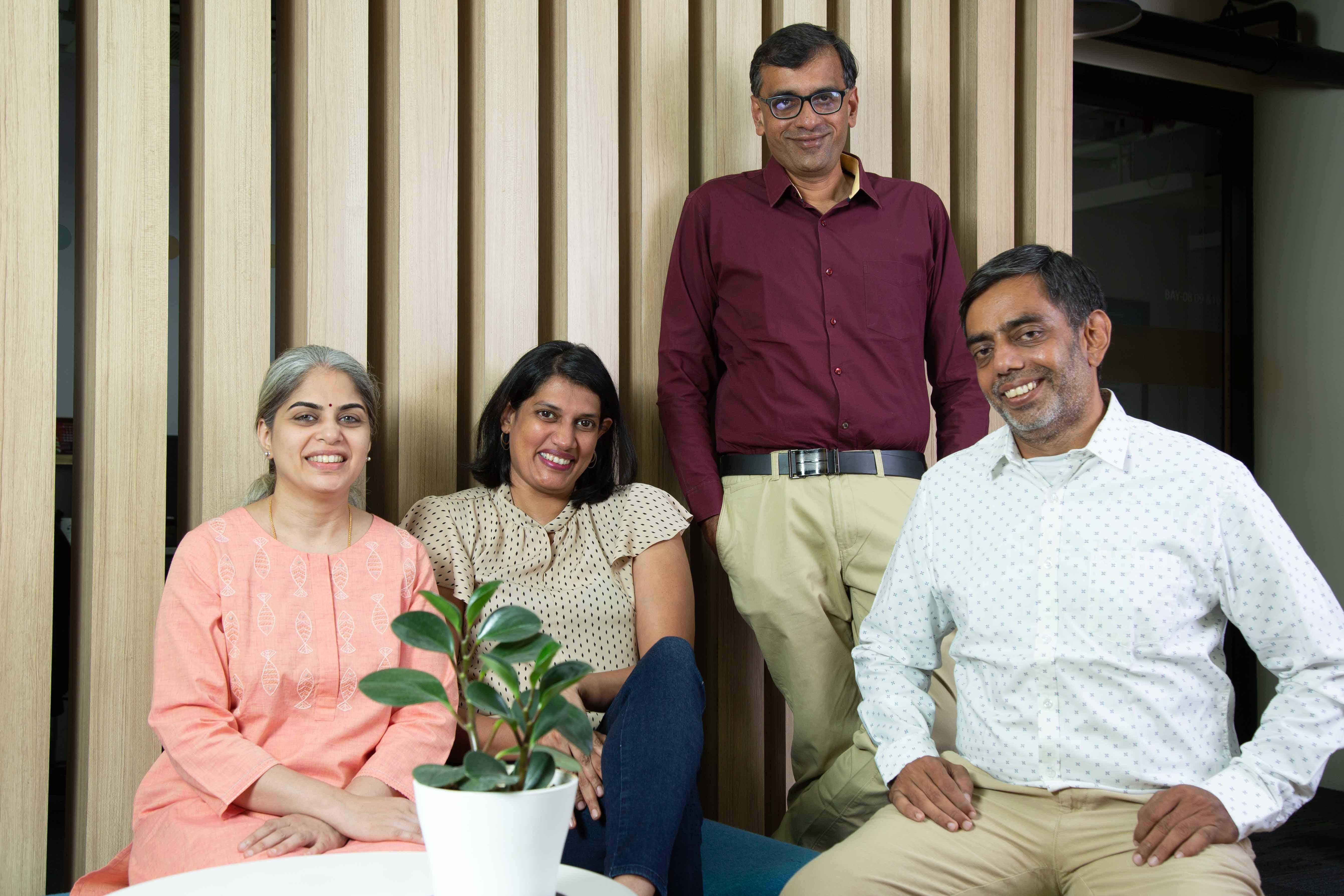
(L-R) Sujata Krishnan, CFO & Partner, Svetha Ravi, Managing Director, Rajiv Raghunandan, Managing Partner, Arun Raghavan, Managing Partner, Arali Ventures
5. Arali has seen multiple exits and partial exits across Fund I, including recent exits in the past six months. What did these journeys reinforce—or challenge—about how early-stage investors should think about risk, patience, and capital efficiency?
Multiple learnings.
We recognize that outcomes are shaped by forces beyond our control—market cycles, timing, and broader dynamics. What consistently proves decisive is founders solving real problems and building the discipline to extract value from customers.
Two truths stand out. Distribution is often underestimated, and capital is frequently deployed too early. While enterprise technology can be capital-efficient, scaling must follow clear market signals. Capital works best as a multiplier of momentum, not a substitute for it.
At the early stage, enterprise success is defined by restraint as much as ambition: choose the battles that matter and survive to compound.
6. Recognizing your investment in HBOX delivered a strong outcome over a four-year period. Looking back, what were the early signals that gave you confidence in the founding team and the business model at inception?
In 2020, virtual care represented a large and expanding opportunity for healthcare providers in the US, yet we saw a clear gap in comprehensive technology solutions tailored to long-tail specialty providers.
Most platforms were either too horizontal or focused on large health systems, leaving the long tail of specialty care providers / clinics such as cardiology and nephrology underserved.
The HBOX founding team demonstrated a deep understanding of these businesses, the regulatory and operational nuances specific to specialty care, and the understanding of how to sell and scale a business to this segment.
With HBOX, the opportunity was clearly scoped and outcome oriented. We predicted that the team could build a $200–300 million revenue business in the US. The platform architecture allowed expansion into adjacent virtual care services, thus creating a credible path to a $400–500 million revenue opportunity over a six-to-eight-year horizon.
7. As you deploy capital from Fund II, how has your approach to portfolio construction evolved compared to Fund I—particularly in terms of sector focus, cheque sizing, and follow-on discipline?
Even with Fund II, the core of our strategy remains unchanged—the early bird approach and thereafter partnering with founders at the seed stage continues to be our operational edge.
We remain firmly focused on enterprise technology solutions, building conviction ahead of the curve and create disproportionate value to our LP’s.
In Fund II, we are writing larger cheques at entry, building a larger equity position. This level of ownership enables us to operate as true, operator-led partners, working closely with founders on product hiring, and early go-to-market decisions rather than taking a passive role.
Also, we have higher reserves for follow-ons, giving us the ability to maintain our stake in later rounds and continue supporting companies as they scale.
Fund II represents a more concentrated and deliberate approach—combining larger initial cheques, meaningful early ownership, and disciplined follow-on participation.
8. From your vantage point, where do you see the next wave of opportunity in India’s B2B and enterprise technology ecosystem over the next five years?
We are closely tracking the application of AI in traditionally laggard industries—sectors that have been slow to adopt technology but are now under pressure to improve productivity, reduce costs, and operate at scale in underserved industries.
Arali also remains highly interested in vertical AI. India’s market depth across industries creates room for focused, domain-specific software that solves real operational pain points rather than offering horizontal, one-size-fits-all solutions.
Vertical AI companies that combine deep industry understanding with modern AI and process capabilities are well positioned to build durable businesses with strong customer stickiness over the next five years.
We are also very bullish on Physical AI, intersection of hardware/AI and services built from India for the world.
9. Arali is known for being approachable even at the idea stage. What advice would you offer founders who are still shaping their first product thesis but are considering institutional capital early in their journey?
It is never too early to speak to Arali!