Deeptech is moving from research papers to investable, scalable businesses, and IAN Alpha Fund is backing that shift. In this edition of Fund in Focus, Padmaja Ruparel, Co-founder, IAN Group, discusses how early-stage investing in India has evolved since IAN began in 2006, what conviction looks like in strategic sectors such as space, semiconductors, defence and biotech, and why patient capital must also be engaged capital. She also shares her views on founders emerging beyond the metros, what it takes to move from IP to a commercially scalable business, and how India can build the next generation of funding pools for its strategic priorities.

FUND IN FOCUS: IAN Alpha Fund’s Padmaja Ruparel on Taking India’s Deeptech Founders from IP to IPO
Padmaja Ruparel, Co-founder, IAN Group
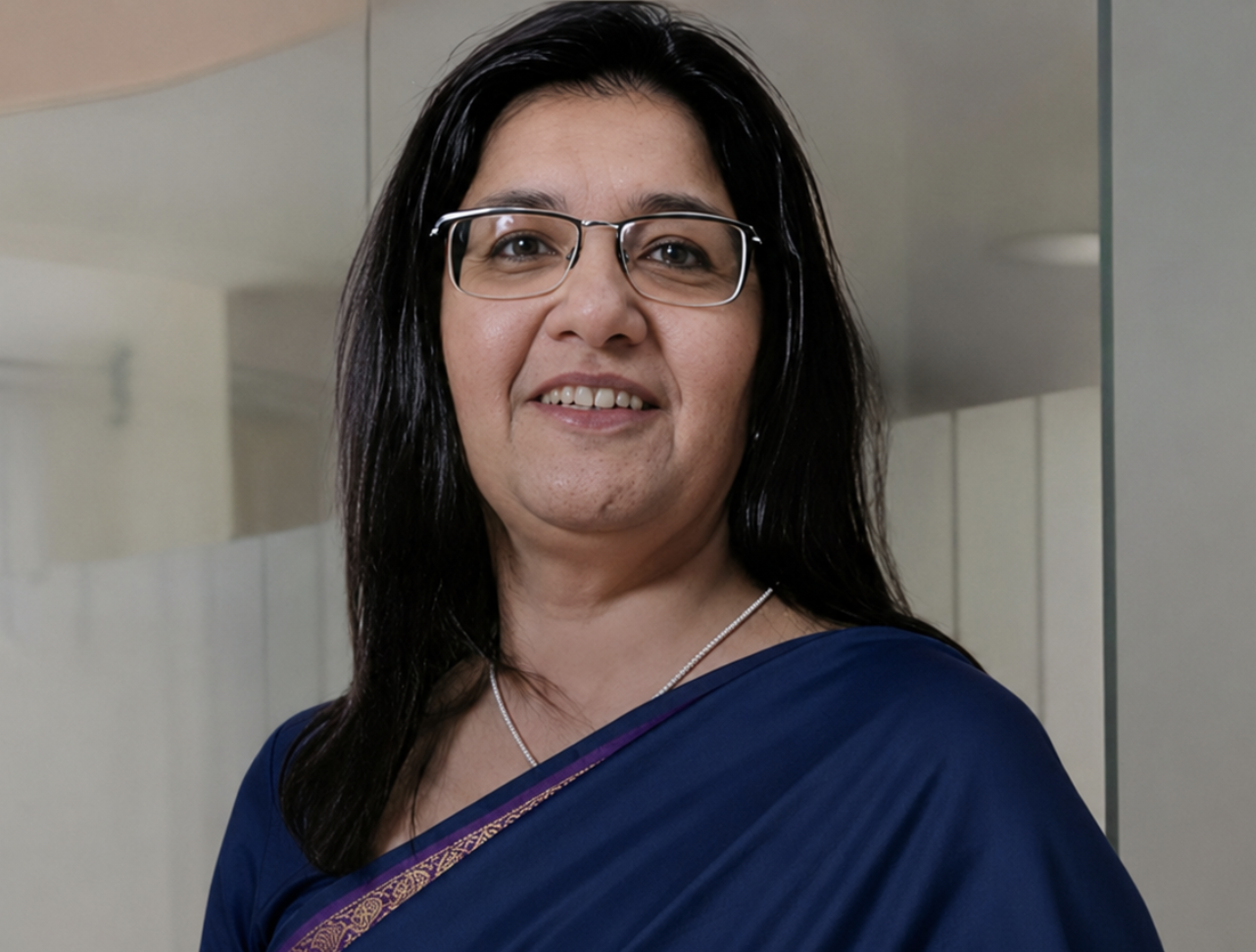
Spokesperson: Padmaja Ruparel, Co-founder, IAN Group
1. IAN has been part of India’s early-stage investment ecosystem for nearly two decades. How has the opportunity for early-stage investing in India evolved over this period, and what has changed most significantly in the kind of businesses and founders you see today?
When we started in 2006, early-stage investing in India was still a relatively small ecosystem. The number of founders was limited, institutional capital was scarce and the idea of building a venture-scale company was not as mainstream as it is today. Over the last two decades, the biggest change has been the depth and ambition of the entrepreneurial ecosystem.
IAN played an important role in bringing angel investing to India and helping establish it as a credible asset class. Today, there is a much larger pool of investors who understand early-stage risk and are willing to back entrepreneurs at the beginning of their journey. Our focus has always been to identify and invest in the best of the next generation of entrepreneurs.
Today, founders are building for much larger markets from day one, and many are solving problems that are uniquely Indian but have global relevance. We are also seeing a much broader range of sectors—from fintech and consumer businesses to space, defence, semiconductors, biotech, climate and advanced manufacturing. The opportunity today is not just about creating startups; it is about building enduring companies out of India.
2. IAN Alpha Fund backs innovation that solves real-world problems as well as businesses aligned with India’s strategic imperatives. What does that investment thesis mean in practice, and what are the characteristics you look for before developing conviction in a company?
For us, innovation has to ultimately solve a meaningful problem. A sophisticated technology by itself is not enough. We look for companies where the technology creates a clear advantage, addresses a large market, and has a credible path to becoming a business.
In strategic sectors, this becomes even more important because the journey from technology to commercialisation can be longer. We therefore spend time understanding the underlying IP, the technical team, the market need, the competitive landscape, and what it will take to get the product adopted.
The founder is central to our conviction. We look for intellectual honesty, resilience, execution focus, leadership quality, and the ability to learn and adapt. We ask whether the founder has the ambition to build a large business and ultimately an institution, rather than simply a successful product.
At the portfolio level, our objective is also to build a high-value, risk-mitigated investment portfolio. Conviction therefore comes from bringing together the quality of the technology, the size of the opportunity, the strength of the founder, and the company’s ability to execute against it.
3. Deeptech has emerged as an important part of IAN Alpha Fund’s portfolio, spanning areas such as space, semiconductors, biotech, defence, advanced energy and AI. What has changed in India to make these businesses increasingly investible, and where do you believe the biggest opportunities are beginning to emerge?
India has reached an important point where the capabilities required to build deeptech companies are coming together. We have stronger research institutions, a growing pool of experienced technical talent, better access to specialised infrastructure and, importantly, greater government push for technologies to be commercialised.
Hence, this is changing the way research and science are being translated into businesses. We are seeing entrepreneurs move beyond simply publishing research papers to building companies around scientific discoveries, intellectual property and commercially relevant technologies. That is a very important shift for the ecosystem and is enabling India to build valuable IP based ventures.
The market has also changed. There is now much clearer domestic demand for technologies in areas such as space, defence, electronics, energy and healthcare. This creates an opportunity for startups to build not only technology but entire industrial businesses around it.
We are particularly excited about companies at the intersection of deep technology and large markets: semiconductors and electronics, space systems, defence technologies, industrial AI, advanced materials, biotech and energy technologies. The opportunity is to build the technology and industrial capabilities that India will need over the next few decades.
4. Many deeptech businesses require patient capital and have development cycles very different from conventional technology startups. How does IAN think about balancing long-gestation opportunities with shorter-cycle businesses while constructing the portfolio?
Portfolio construction has to recognise that not every company follows the same clock. A SaaS or consumer technology company may reach meaningful revenues relatively quickly, whereas a semiconductor, space or biotech company can require years of R&D, certification, manufacturing and customer validation. The key is to build a risk mitigated portfolio with an ability to start returning money to investors early. This is key. We have honed this over decades and demonstrated this—now with a much more diverse portfolio of companies.
We therefore cannot apply one template to every business. For deeptech, we look at milestones rather than simply asking when the company will become profitable. Has the technology been validated? Has the IP been established? Is there a credible path to certification, manufacturing, and customer adoption?
At the portfolio level, we also deliberately look at a mix of companies across stages, including pre-revenue and post-revenue businesses. This helps us balance the higher risk and longer gestation of some investments with companies that have already demonstrated commercial traction. It also helps create a balance in terms of liquidity and the fund’s ability to generate high returns for investors.
But patient capital does not mean passive capital. It means understanding the journey and ensuring that every round of capital takes the company meaningfully closer to commercialisation.
5. IAN’s philosophy has traditionally extended beyond providing capital to mentorship, market access and active engagement with founders. As India’s startup ecosystem has matured, how has the role of an early-stage investor evolved beyond writing the first cheque?
Writing the first cheque is the easy part. When we started, capital was scarce, so money was most of what an investor brought. Today there is more capital around, and founders look for what comes with adding value to the investee companies and enabling returns.
For us, that has always been money, mentoring and market access. Between a promising idea and a scalable company, a founder has to get a lot of things right: the right team, early governance, the first big customers and the next round of funding. Our network of entrepreneurs, business leaders and domain experts helps founders with exactly these.
The role has become more hands-on with deeptech. A semiconductor, space or biotech company has to get through validation, certification and manufacturing before it earns much, and that takes years. Patient capital doesn’t mean passive capital. We stay close and make sure each round moves the company closer to commercialisation.
In a mature ecosystem, an investor has to be a value-creation partner. Backing a company is only the beginning. The harder part is helping the founder build something strong enough to outgrow the founder.
6. IAN has backed entrepreneurs across India, including founders emerging from Tier II and Tier III cities. Are you seeing a meaningful shift in where innovation is coming from, and what does this mean for how investors source and evaluate opportunities?
Absolutely. Innovation is no longer concentrated in a handful of metros. We are seeing entrepreneurs translate the problems they experience in their own lives into opportunities that they can solve innovatively. We are also seeing founders emerge from Tier II and Tier III cities, universities, research institutions, and industrial clusters outside the traditional startup centres.
What has changed is access. Digital infrastructure, better connectivity, online communities and a wider awareness of entrepreneurship have reduced many of the geographic barriers that existed earlier. In deeptech particularly, the location of the founder may be linked to where the research, laboratory, or manufacturing capability exists.
For investors, this means the way to access these founders has changed. We cannot rely only on existing networks in Bengaluru, Delhi or Mumbai. We have to go closer to universities, incubators, research institutions and emerging entrepreneurial communities, while also leveraging our online reach to discover founders and ideas beyond traditional networks.
Evaluation, however, has to remain fundamentally clinical and merit-based. Geography should never substitute for understanding the problem, the solution and the market. And many times, we see the innovation solving problems emerging are geography-driven: for instance, innovations from coconuts emerge from the southern part of India—but could have a large market far beyond South India.
7. As more Indian startups build sophisticated technologies in areas critical to the country’s strategic and industrial priorities, what will it take to help these companies move from strong technology or IP to commercially scalable businesses?
This is perhaps the most important question for India’s deeptech ecosystem. We have demonstrated that Indian talent can build world class solutions based on research based technology. The harder challenge is taking that technology through validation, certification, manufacturing and customer adoption.
There is often a funding gap between technical validation and commercial scale. Private capital is understandably cautious when several risks—technology, regulatory approval, manufacturing and market adoption—sit on top of each other. This is where patient institutional capital and government support can play a catalytic role by reducing some of those risks. And this is extremely well filled by the RDI Fund: enabling technologies to move from TRL 4 to TRL 9. And further, it is catalytic as it has enabled private capital to also come in at this stage.
We also need stronger industry-startup linkages. A deeptech company cannot build a large business only by raising successive rounds of venture capital. It needs anchor customers, manufacturing partners, distribution channels, and access to global markets.
The journey from IP to IPO requires much more than IP. It requires building a scalable business around that IP.
8. Having invested across multiple cycles, what distinguishes founders who are able to build enduring companies from those who may have a compelling idea or technology but struggle to translate it into an institution?
Technology gets a company started, but people, execution, and the ability to keep evolving to remain relevant to customers determine how far it goes.
The founders who build enduring companies tend to have a very strong sense of purpose but are not rigid about how they get there. They understand their customer deeply, attract people who are better than themselves in different areas, and are willing to change their assumptions when the evidence changes.
Another important characteristic is capital discipline. Raising money is not the same as creating value. The strongest founders understand what each round of capital is meant to achieve and build the organisation ahead of the next stage without losing entrepreneurial speed, without losing focus on governance.
Over time, the company also has to become bigger than the founder. That means creating leadership depth, systems, governance and a culture that can sustain growth. The transition from founder-led startup to institution is one of the most difficult and most important parts of the journey.
9. Looking at the next five to ten years, what do you believe will define the next phase of India’s early-stage investment ecosystem, and where do you see IAN Alpha Fund playing a role in that evolution?
The next phase will be about moving from a startup economy to an innovation and industrial economy. India has already demonstrated that it can build very large technology businesses. The next opportunity is to build companies that create intellectual property, brand value and scale. It is moot to create companies which are valued far beyond the size of their industrial base: driven by tech, IP, scale, brand and governance.
I expect deeptech to become a much larger part of the ecosystem, particularly across space, defence, semiconductors, biotech, advanced energy, AI and industrial technologies. But this will require a different capital architecture. Companies will need patient capital, specialist expertise and access to customers and manufacturing, not just venture funding. And capital providers will need to innovate with new funding pools and structures.
To my mind, just as IAN solved the entrepreneurs’ funding requirement at the early stage, I see further investment innovation and handholding models emerge from the IAN platform. And make it the platform of choice for both investors from India and the world as well as for founders. We want to back ambitious founders developing innovative solutions early and help them navigate the long journey from technology to scale, both in India and the world.
India needs to create the next generation of global companies; we must build the next generation of funding pools to build for the strategic imperatives of the country.