As India’s venture capital ecosystem matures, the opportunity is expanding beyond individual sectors to encompass a changing consumer economy, deep technology and a stronger domestic innovation base. In this edition of Fund in Focus, Archana Jahagirdar, Founder and Managing Partner, Rukam Capital, discusses the firm’s investment philosophy, what it takes to build enduring consumer businesses, the case for greater domestic institutional participation in venture capital, and why disciplined investing and patient capital will become increasingly important in the decade ahead.

FUND IN FOCUS: Rukam Capital’s Archana Jahagirdar on Why India Needs a Deeper Domestic Risk-Capital Base
Archana Jahagirdar, Founder and Managing Partner, Rukam Capital
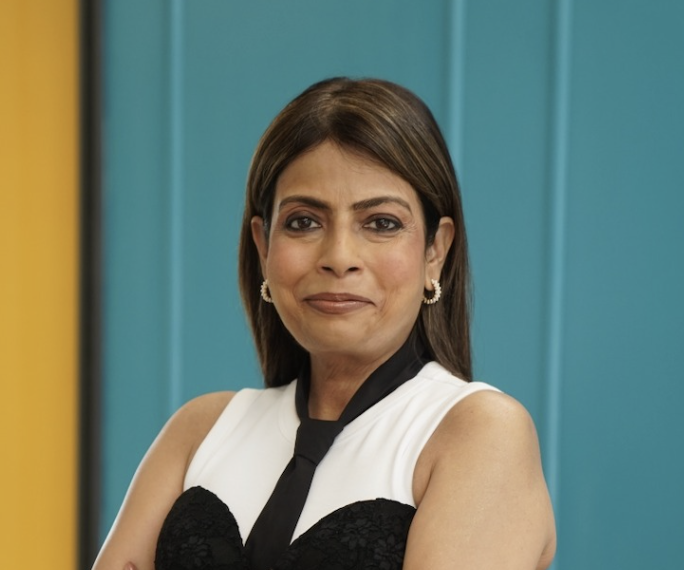
Spokesperson: Archana Jahagirdar, Founder and Managing Partner, Rukam Capital
1. Rukam Capital was founded with a strong focus on backing early-stage consumer businesses, but over the years the platform has also expanded into deep technology through a separate investment vehicle. What drove this evolution, and how do these two investment strategies complement one another within Rukam’s broader vision?
Our philosophy has always been to back businesses that can create long-term value. That philosophy has not changed.
What changed was the opportunity set. As India's innovation ecosystem matured, we saw world-class founders emerging not only in consumer businesses but also in deep technology. However, these businesses require different fund structures, investment horizons and expertise. Rather than stretching one investment strategy to fit both, we chose to build dedicated investment vehicles designed for each.
Together, they reflect our conviction in India's two defining growth stories. One is India's expanding consumer economy, and the other is its rapidly advancing innovation ecosystem. While the strategies are distinct, they complement each other by allowing us to back different types of businesses with the investment approach best suited to their growth journey.
2. Rukam recently released Gen Alpha Decoded: The Consumer-Brand Dynamic, a research report that moves beyond investment trends to decode the behaviour of India's next generation of consumers. Your report argues that peer influence, rather than digital creators alone, is increasingly shaping purchasing decisions among Gen Alpha. How do insights like these influence the way you evaluate consumer brands and identify investment opportunities?
At Rukam, we believe the strongest consumer investments begin with understanding why people buy, not just what they buy. Research like Gen Alpha Decoded helps us identify behavioural shifts early and evaluate whether those shifts can create enduring consumer businesses.
Our finding that peer influence is increasingly outweighing digital creators is more than a marketing insight. It signals that trust is becoming community driven. That changes how we evaluate businesses. We look for founders building products that generate genuine advocacy, repeat behaviour and organic customer loyalty rather than relying primarily on paid acquisition. Behavioural insights ultimately help us distinguish enduring brands from short-term trends.
3. Rukam’s portfolio today includes brands such as Sleepy Owl, Burger Singh, GO DESi and Upliance.ai. Looking across these investments, what common characteristics have consistently given you conviction that a business has the potential to build an enduring consumer brand?
On the surface, these companies operate in very different categories, but they share the same DNA.
The first is founders with a deep understanding of Indian consumer behaviour. They are solving distinctly Indian consumer problems rather than replicating global ideas. The second is disciplined execution. Enduring brands know which trends to embrace and which to ignore.
Markets, channels and consumer preferences will evolve, but businesses that consistently solve real problems and earn consumer trust are the ones that stand the test of time.
4. India has made remarkable progress in creating startups, but institutional domestic capital continues to remain relatively under-allocated to venture capital. From your perspective, what needs to change for venture capital to become a more widely accepted asset class among Indian institutional investors?
A significant pool of domestic capital still sits on the sidelines when it comes to venture capital, and to us, that is fundamentally a question of trust and recognition of the sector’s long-term economic value.
India’s venture capital ecosystem is maturing, with more homegrown funds and a steadily expanding domestic limited partner base. For institutional capital to participate at scale, venture capital must consistently demonstrate disciplined investing, strong governance and sustainable returns. Trust is earned through performance over time, not promises.
At the same time, we believe the time is right for the government to recognise venture capital as an important contributor to India’s broader economic growth and extend appropriate incentives to the sector, much like it has done for other strategic industries. Venture-backed startups are not only driving technology and innovation but also creating jobs, attracting global talent, contributing to GDP, strengthening India’s competitiveness and generating foreign exchange. More importantly, access to risk capital is critical to building the next generation of Indian businesses and giving our Gen Z entrepreneurs the opportunity to build at scale.
A stronger domestic capital base, supported by the right policy environment and greater institutional confidence, will therefore be essential to funding innovation and creating long-term economic value for India.
5. Looking ahead, what do you believe will define the next decade of Indian venture capital? How do you see Rukam Capital evolving alongside the changing needs of founders, limited partners and the broader innovation ecosystem?
The next decade of Indian venture capital will be defined by stronger fundamentals rather than growth at any cost. We will also see a deeper domestic risk capital base, with family offices, institutions and successful entrepreneurs playing a larger role as limited partners.
At Rukam Capital, we want to evolve alongside that shift by being long-term partners to founders while continuing to deliver disciplined, sustainable returns for our investors. We will remain focused on backing businesses solving real consumer problems while expanding our lens to opportunities across AI, deep technology and manufacturing-led innovation.
6. Consumer businesses today are being shaped by rapidly changing demographics, digital adoption and evolving aspirations of Indian consumers. Which long-term behavioural shifts give you the greatest conviction as an investor, and where do you believe the next generation of category leaders will emerge?
Indian consumers are becoming far more discerning. Beyond affordability, they increasingly seek products that reflect their lifestyles, aspirations and values, whether in healthier food, clean beauty, wellness or premium everyday essentials.
We believe the next generation of category leaders will emerge from India's manufacturing ecosystem. New-age consumer brands are growing significantly faster than their categories because they combine deep consumer insight with strong manufacturing capabilities. For us, this is a structural shift that reinforces our conviction in India's next generation of consumer businesses.
7. Venture capital today is increasingly about much more than providing capital. How has Rukam’s approach to founder partnership evolved since your first investments, and what role do you believe investors should play in helping companies navigate their scaling journey?
Capital is only one part of the equation. Our role is to help founders build enduring businesses.
Over the years, our partnership has evolved from supporting product-market fit to helping founders scale through strategic guidance, leadership hiring, governance, fundraising and market access. Every founder's journey is different, so there is no universal playbook. Our role is to bring perspective, open the right networks and ask the right questions while ensuring founders remain firmly in the driver's seat.
8. As Rukam expands its deep technology strategy alongside its consumer portfolio, how do you think about balancing patient, long-gestation innovation with businesses that can achieve commercial scale more quickly? What lessons has this dual approach taught you about capital allocation?
We do not think about capital allocation as balancing one sector against another. We think about building a portfolio with different timelines to value creation.
Some businesses demonstrate commercial traction relatively early, while others, particularly in deep technology, require longer periods of product development, validation and market adoption before they scale. Our responsibility is to ensure that each investment is backed with the right expectations, the right capital structure and the appropriate level of patience.
The biggest lesson has been that every opportunity should be evaluated on its own merits rather than against a common investment timeline. Different businesses create value differently, but disciplined investing, founder quality and long-term conviction remain constant across our investment decisions.
9. You have been actively involved in ecosystem-building initiatives such as Startup Mahakumbh and have consistently advocated for stronger collaboration between founders, investors and policymakers. How important is institution-building alongside fund-building, and what role should venture capital firms play in shaping India's entrepreneurial ecosystem?
Building a strong entrepreneurial ecosystem requires more than monetary investment. It requires alliance between founders, investors, policymakers, and industry stakeholders to create an environment where innovation can thrive.
Institution building is as important as fund building because it strengthens the environment in which startups can succeed. Venture capital firms should contribute beyond investing by sharing market insights, mentoring founders and participating in policy conversations that help create a more resilient, inclusive and globally competitive innovation ecosystem.