Welcome to our Fund in Focus series where we profile our member VC funds, underscore their investment philosophy, and highlight some of their interesting work. In this exclusive chat with Ankit Kedia, Founder & Lead Investor, Capital-A, he shares how the fund is backing India’s “real economy” startups across manufacturing, climate tech, and DeepTech. Drawing from two decades of industrial experience, Ankit discusses Capital-A’s conviction in patient capital, policy-aligned growth, and India’s resurgence as a global hub for real-world innovation.
Fund In Focus: Why Capital-A Believes India’s Next VC Supercycle Will Be Built, Not Coded
Ankit Kedia- Founder and General Partner -Capital-A
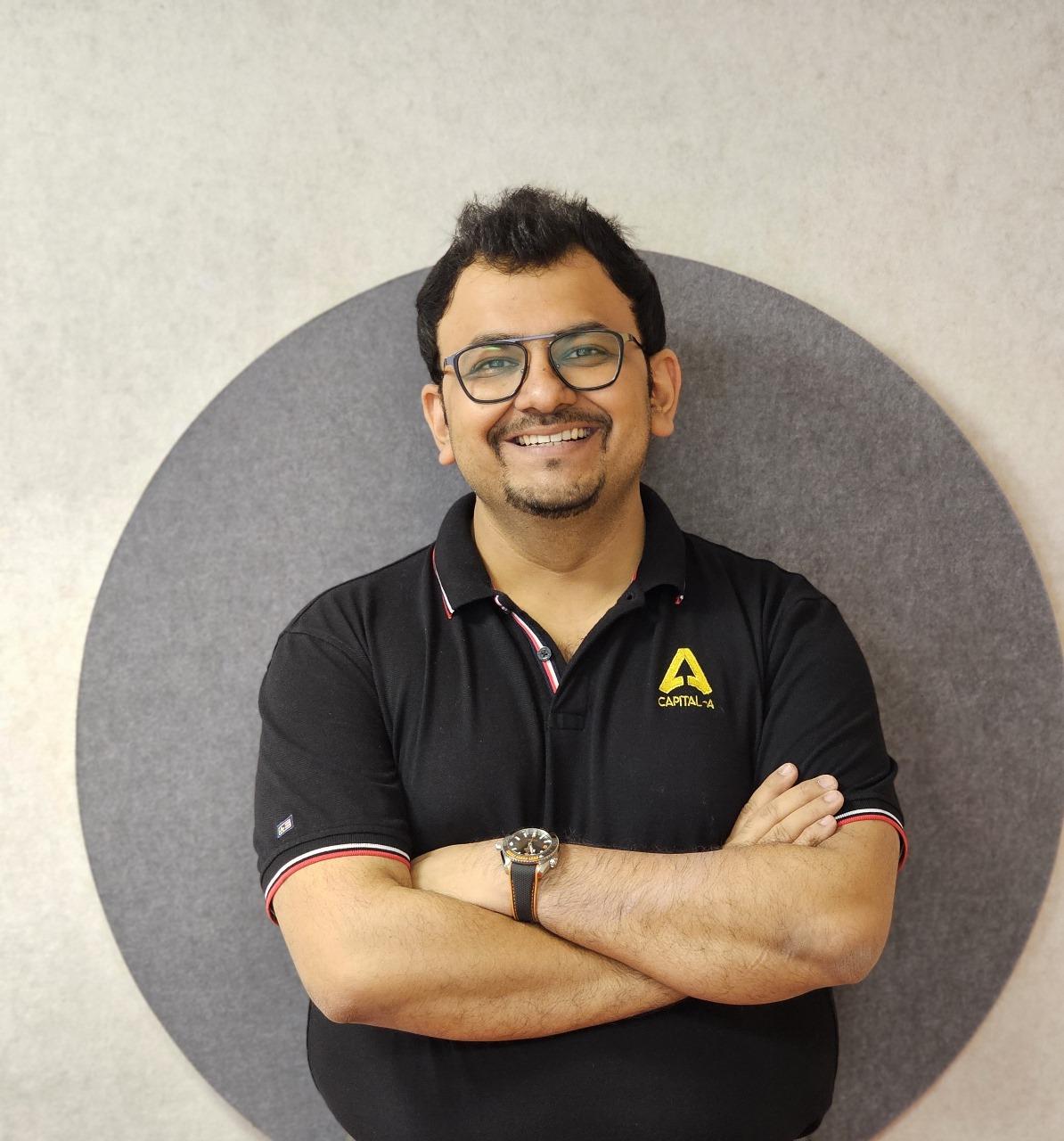
Spokesperson: Ankit Kedia, Founder and General Partner, Capital-A
1.When you founded Capital-A, most VC capital in India was chasing consumer internet and SaaS. What white space did you see in manufacturing, climate tech, and deep-tech that others were missing?
Starting Capital-A in 2021 felt like going back to my roots. I’d spent nearly two decades building Manjushree Technopack, living the highs and lows of Indian manufacturing from the shop floor up. So when most investors were backing SaaS and consumer stories, I saw a massive white space — early-stage capital that truly understood factories, supply chains, and physical product innovation.
Manufacturing, climate, and deep tech weren’t “themes” for us; they were the world we came from. That’s why our first fund, even with a few fintech or SaaS bets, was anchored in B2B businesses like Tan90, Matchlog, Leumas, and Oorjaa Energy — founders solving real industrial problems, not chasing trends. We built Capital-A to back India’s new generation of builders who design, make, and scale products from the ground up.
2. From your vantage point, what differentiates founders who succeed in India’s manufacturing and industrial ecosystem versus those building in digital-first sectors?
Founders who succeed in manufacturing are cut from a different cloth. They understand that progress happens in months and years, and not sprints. They know what it means to manage vendors, customers and internal teams with a very different cultural playbook. Their journey demands patience, precision, and a deep respect for process.
The best of them combine technical depth with operational humility — the ability to build defensibility while managing working capital, supply chains, and regulations. It’s a different DNA from digital-only founders who move fast and pivot often. Manufacturing founders play the long game, and our job is to back them with the same patience and conviction.
3. As India’s DeepTech and SpaceTech ecosystem gains momentum through initiatives like IN-SPACe and private payload missions, what opportunities do you see for private capital to catalyse indigenous innovation and industrial participation?
DeepTech and SpaceTech are at a turning point. We’re seeing founders build technologies that were once only dared to be built outside India — propulsion systems, composites, sensors, avionics. Our investment in Manastu Space, which is building green propulsion systems from Mumbai, captures that spirit.
These sectors need investors who can look beyond early R&D risk and help founders navigate labs, suppliers, and regulators. Private capital can catalyse this shift not just by writing cheques, but by stitching together India’s emerging industrial value chains. For us, that means partnering early, mentoring deeply, and helping founders commercialize world-class technologies built in India.
4. Capital-A believes India’s next VC super-cycle will be powered by real-world innovation. What macro or policy trends — PLIs, Atmanirbhar Bharat, global supply-chain diversification — give you confidence in this thesis?
India’s manufacturing comeback is being powered by three strong tailwinds: policy, people, and pride.
Schemes like PLI and Atmanirbhar Bharat have turned the government into an early customer for Indian innovators. Global supply-chain shifts are pushing manufacturers to look beyond China, and India offers both scale and stability. Most importantly, there’s a new generation of engineers who want to build things — not just apps.
We see this play out daily in our portfolio — from defense electronics to industrial automation — where founders are solving hard problems that make India more self-reliant. For us, that’s what makes this the most exciting decade for real-world innovation.
5.With ticket sizes ranging from $750K to $1M, how do you approach follow-on participation and value creation beyond capital?
We typically write the first cheque between $750K and $1M, but our real investment is time. Manufacturing and industrial startups need patient capital, so we reserve over half our fund for follow-ons in high-conviction companies.
Beyond money, we bring an operator’s lens. We sit with founders to troubleshoot scaling challenges, help with hiring, and connect them to partners and customers. Our advisory board includes leaders from manufacturing and deeptech who’ve built factories, not just pitch decks. That’s our version of “value creation.”
6. Given the current funding environment, what kind of LP conversations are you having — especially around sustainability, manufacturing, and long-term resilience?
Our LP conversations today feel very different from 2021. Manufacturing and climate aren’t “boring” anymore — they’re the next big wave.
Most of our LPs come from industry — promoters, and family offices who understand what it takes to build a plant, not just a product roadmap. They appreciate that these sectors require patient capital and steady hands. Our discussions often revolve around durability, decarbonization, and design — how sustainability can be both a responsibility and a margin driver.
In many ways, these LPs are not just investors but peers who share our belief that India’s real innovation will come from its factories, labs, and shop floors.
7.Can you share a story where Capital-A’s operational or strategic involvement significantly changed the trajectory of a portfolio company?
One story that stands out is Tan90 — three PhDs from IIT and IISc developing phase-change materials for industrial cooling. After we invested, we worked closely with them on business development and market expansion. Together, we helped them diversify into q-commerce and logistics, driving nearly 4x revenue growth within two years.
Another is Leumas, which builds modular micro-factories. We facilitated partnerships with leading D2C brands that accelerated their growth by over 15x. These outcomes came from more than board meetings — they came from being in the trenches with our founders.
8. DeepTech and industrial automation require patient capital and sectoral expertise. How does Capital-A underwrite risk and timelines for such frontier technologies?
Deeptech investing isn’t about spreadsheets; it’s about conviction. We combine technical diligence with real-world judgment, shaped by years of operating experience. We stress-test IP defensibility, team depth, and technology readiness levels while mapping realistic milestones. For unproven technologies, we lean on our network of industry experts to validate technical feasibility and market potential. We also rely on an independent investment committee with domain specialists who help us evaluate.