Welcome to our 'Fund in Focus' series where we spotlight IVCA member funds, unpack their investment philosophy, and explore how they are shaping India's capital landscape. In this edition, Amit Sharma of Cactus Partners outlines how the firm backs companies transitioning from product–market fit to scalable growth. The conversation explores India's manufacturing resurgence, evolving early growth-stage capital, and lessons from Cactus' maiden fund as it prepares for Fund II. Anchored in disciplined investing and operational partnership, Cactus' approach reflects a broader shift toward building sustainable, institution-ready businesses in India's private markets ecosystem.

Building with Certainty: Cactus Partners: Backing India's Builders at the 1-to-10 Inflection Point
Amit Sharma, General Partner, Cactus Partners
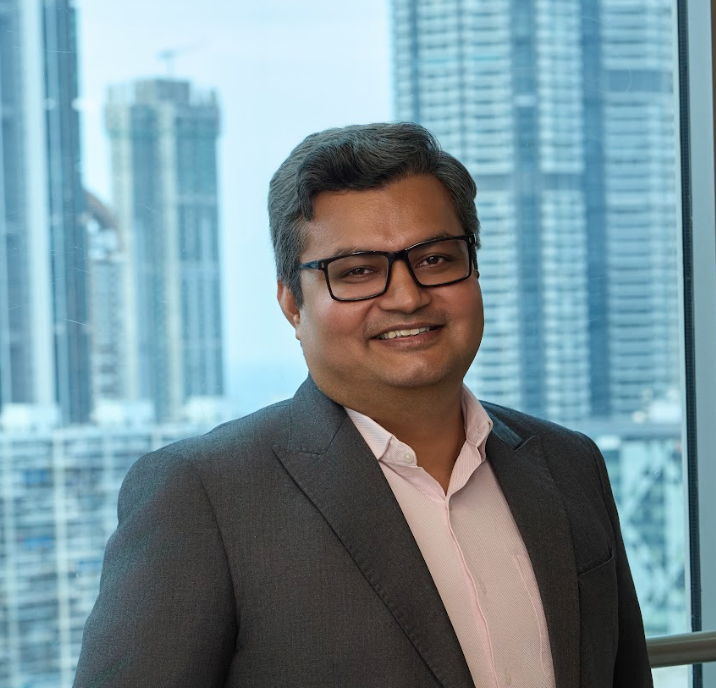
Spokesperson: Amit Sharma, General Partners, Cactus Partners
Cactus Partners invests at the early growth stage—post product-market fit but pre-scale. What, in your view, distinguishes a company that is truly ready for the "1-to-10" journey from one that merely appears ready?
Product–market fit can mean different things to different investors. In our case, we aim to identify high-potential companies that have moved beyond the experimentation stage and now require capital to accelerate their growth journey. While this objective sounds straightforward, assessing it in practice is relatively more complex.
Accordingly, we rely on a combination of quantitative metrics and qualitative indicators. One important factor is achieving a critical revenue scale, which may vary across industries and business models. The second factor is revenue recurrence — customers should demonstrate a willingness to repeatedly purchase the product or service the company offers. A high retention ratio is essential, as businesses with significant customer churn end up having to continually incur costs in acquiring new customers, which is not sustainable.
That said, retention alone does not necessarily indicate product–market fit. Customers may continue purchasing if products or services are heavily discounted. Therefore, the business must also generate industry-leading gross margins. Strong gross margins indicate that customers are willing to pay for the value-addition or utility created by the business. Collectively, these indicators suggest that a company is transitioning from the "0-to-1" phase to the "1-to-10" phase of growth.
Cactus focuses on tech manufacturing, enterprise technology, and consumer businesses targeting the top 10% of the population. What structural shifts in India make these segments particularly compelling over the next 5–7 years?
We believe that our focus sectors of Advanced Manufacturing, Technology, and Aspirational Consumer will see large businesses emerging from India due to structural factors and macro tailwinds. The manufacturing sector is witnessing impressive growth, which we believe will continue into the foreseeable future. Regulatory tailwinds, the 'Make in India' program, PLI incentives, a large domestic market, favorable labor costs and global focus on supply chain diversification ("China+1") are accelerating growth in this sector. Well-managed manufacturing businesses offer a strong compounding opportunity with a very attractive risk-return profile. Our manufacturing investments, such as Lohum, Indigrid and Brandworks, are doing exceptionally well.
Technology businesses with strong use cases will continue to be a focus for us. India's technology talent pool, problem-solving approach of entrepreneurs, and technology adaptability will be instrumental in building large global businesses. We see several opportunities emerging in multiple technology domains such as AI, cybersecurity, health-tech, semiconductors, space-tech, robotics, IoT, defense-tech, to name a few. Indian technology entrepreneurs have already cracked the code for building international businesses from India.
In addition, we intend to make selective investments in consumer businesses to benefit from rising discretionary incomes, increasing aspirations of India's young population, and sustained growth in consumer spending. Consumption comprises about 60% of India's GDP and this contribution is expected to sustain as India's real economy continues to grow at 7%+ p.a. The long-term trends of premiumization coupled with growing per capita and disposable incomes offer investable opportunities in profitable businesses that target the top 10% of the population (or about 150 million consumers), which has the ability and the intent to pay for consumer products and services.
Cactus closed its maiden fund at over ₹630 crore and is now preparing to launch Fund II. What lessons from your maiden fund have most influenced the way you are thinking about deployment strategy, sector focus, and founder engagement in the next phase?
We believe the core elements of our strategy have worked very effectively in Fund I. Our disciplined, post–PMF, fundamentals-first investment approach with the intent to back purpose-driven founders building sustainable and financially prudent businesses has yielded favorable results. When we launched Fund I, this approach was just a philosophy, which we strongly believed in but didn't have any proof to showcase. Now, our Fund I portfolio performance demonstrates our ability to implement that philosophy execute successfully in practice.
Of course, the Fund I journey has provided us several key learnings. Our evaluation process has become significantly more streamlined, sharper, and refined because of these experiences. For supporting our portfolio companies, we have developed deeper operational insights, enabling us to identify improvement areas more quickly and to provide timely, relevant support. Our sourcing capabilities have also sharpened along with an extension of our networks. Most importantly, we have built a strong team and culture aligned with our vision. We will continue the learnings, agility, and adaptability in Fund II as well with the intention of establishing the building blocks of a high-quality, enduring, asset management institution.
As you step into Fund II, what will remain unchanged in the Cactus philosophy — and where do you see room for evolution, whether in cheque size, portfolio construction, or the depth of operational involvement?
We intend to continue with the same investment strategy in Fund II that we successfully implemented in Fund I. The effectiveness of our strategy is reflected in the strong portfolio performance, which currently is at 40%+ IRR with zero write-downs or write-offs. This performance is particularly noteworthy given that Fund I deployment began during the relatively challenging 2021 investment vintage. Our disciplined, "fundamentals first" approach, and rigorous evaluation framework have contributed to this outcome.
Fund II will continue to follow the same investment philosophy, with a similarly moderately concentrated portfolio of 12–14 companies. The GAP (Growth Acceleration Playbook) will remain central to our strategy, enabling us to actively support portfolio companies across four key value-creation levers: Strategy, Organization Design, International Expansion, and Governance.
The only key change in Fund II will be an increase in cheque size. In Fund I, initial investments were typically in the range of USD 3–5 million, largely due to fund size constraints. We believe our strategy works well with initial investment of USD 6–10 million, allowing us to acquire meaningful ownership stakes in the high-potential companies that we identify. Our preference is to hold positions ranging from high single-digit percentage to approximately 20%, which aligns better with the post-PMF stage at which we invest. We are accordingly seeking to right-size Fund II with the intent to maintain a first cheque to follow-on ratio of 60%:40% while preserving continuity across all other elements of our investment approach, philosophy, and operating model.
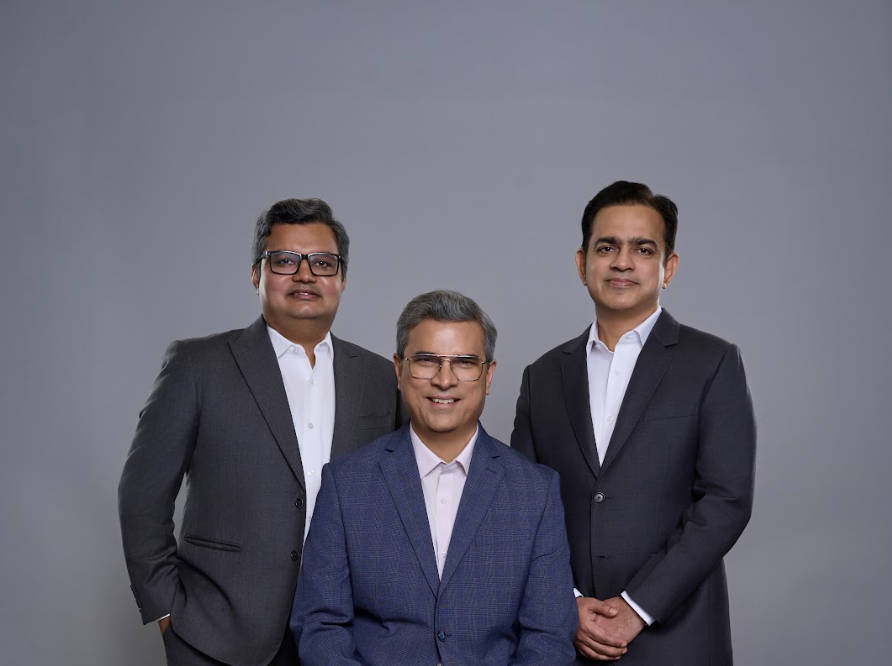
(L-R) Amit Sharma, General Partner; Rajeev Kalambi, General Partner; Anurag Goel, Co-Founder & General Partner, Cactus Partners
Your proprietary Growth Acceleration Playbook (GAP™) focuses on design, governance, and strategic clarity. Could you share a real-world example of how GAP has materially influenced a portfolio company's growth trajectory?
Cactus Partners has identified four high-impact business-building pillars, collectively referred to as the Growth Acceleration Playbook ("GAP"), designed to support portfolio companies in scaling efficiently and sustainably:
- Strategy – Developing and executing strategic initiatives to accelerate business growth and scale. This includes support across key business levers such as technology adoption, branding and marketing, sales enablement, category expansion, product strategy, pricing optimization, and market positioning.
- Organization Design – Preparing the organization for its next phase of growth through organizational structuring, organogram design, leadership hiring, capability building, and team development.
- International Expansion – Advising and supporting multi-geography growth strategies, identifying the most efficient go-to-market pathways, enabling execution, and facilitating international business development opportunities.
- Governance – Building institutional strength by embedding high ethical standards through effective board structuring, enhanced financial controls, and the establishment of robust systems, processes, policies, and operating procedures.
We work with each of our portfolio companies on one or more of these levers. For example, with Auric, Rubix and Indigrid, we work/worked closely on their strategy including growth initiatives, pricing, product alignment, market focus etc. We support Lohum, Indigrid, Brandworks, and AMPM on their organization design. We worked with AMPM, Auric, and Kapture on their international expansion strategy. We work with almost all our companies on governance aspects.
You've invested in manufacturing-led companies such as Indigrid and supply chain platforms like Showroom B2B. What is your thesis on India's manufacturing resurgence?
Cactus Partners was an early mover investing in India's advanced manufacturing ecosystem, with our first investment back in January 2022 in Lohum. The other manufacturing investments include Indigrid and Brandworks, while Showroom B2B is at the intersection of manufacturing and "aspirational consumer". We remain bullish on opportunities within advanced manufacturing, particularly across deep-tech sub-verticals where companies are developing proprietary IP or design capabilities for both domestic and global markets.
India's manufacturing sector is entering a critical scale-up phase. The emergence of national champions across advanced manufacturing is expected to create attractive long-term compounding opportunities with favorable risk–return characteristics. Structural tailwinds, including strong policy support under the 'Make in India' initiative, a large and expanding domestic market, competitive labor costs, increasing localization, and focus on global supply-chain diversification continue to strengthen India's positioning as a global manufacturing hub.
Companies that combine engineering excellence, technology adoption, and disciplined capital allocation are likely to emerge as long-term winners in this evolving landscape. We accordingly continue to actively evaluate opportunities in advanced manufacturing businesses that demonstrate strong execution capabilities, scalable business models, and the potential to build globally competitive platforms originating from India.
Cactus exited Rubix with a 48% IRR. What, in hindsight, made that investment successful—from entry to exit?
In our view, the key drivers of success were a strong focus on fundamentals, backing a high-quality founding team, continuous engagement to refine strategy, and maintaining a proactive approach toward exit planning.
The Rubix team had demonstrated a strong execution track record and a deep understanding of the market in which they operated. Our channel checks indicated that the company had developed a robust product suite addressing a genuine market need. By leveraging multiple data points, the company enabled credit-starved MSMEs to access financing at reasonable costs, thereby solving an important problem in a large and growing market.
We worked closely with the management team to further streamline strategy and optimize pricing. With all these ingredients, the business possessed strong strategic and synergistic value for a larger industry player. We supported the company in identifying and securing the right strategic transaction. These factors collectively contributed to a successful outcome and enabled us to achieve a strong exit, albeit somewhat earlier than originally anticipated.
What does India's early growth-stage ecosystem still need more of—patient capital, operating talent, deeper governance, or something else?
We believe the startup ecosystem in India is still evolving; hence, it requires all of the above and more. Operating talent continues to improve materially, and successful entrepreneurs are increasingly demonstrating a strong willingness to mentor and support the next generation of first-time founders. As a result, the learning curve is getting steeper.
Early growth stage investment funds are also evolving. The patience of capital deployed by such funds is often influenced by the nature of the underlying capital providers investing in them. With government initiatives such as the RDI Fund, along with stronger outcomes emerging from deep-tech companies, we expect larger pools of patient capital to develop over time. Governance remains a hygiene factor and is entirely non-negotiable. Governance lapses can damage not only individual companies but also the credibility of the broader ecosystem. Accordingly, both startups and investors must continue strengthening governance standards — a trend that is already gaining momentum.
In addition, we believe financial prudence at the early-growth stage remains under-emphasized. Sustainable businesses are built on sound unit economics and pragmatic capital allocation, rather than excessive capital burn. Of course, some initial capital burn might be essential in some business models, which is the reason for the existence of funds providing risk capital. But capital should be viewed as a tool to build durable, sustainable businesses, not as an end goal in itself. Equally, funds must exercise patience, as meaningful businesses require time to scale. The objective is to operate as long-term partners to entrepreneurs, supporting them through both growth phases and challenging periods, and helping them navigate the inevitable complexities of building enduring companies.
What kind of founders do you work best with? Is there a particular mindset that aligns strongly with the Cactus philosophy?
We seek to identify and back high-quality entrepreneurs who possess deep domain knowledge of their business dynamics, coupled with either a disruptive idea or differentiated execution capabilities. The Fund primarily partners with purpose-driven founders who demonstrate clarity of vision, strong execution ability, and long-term persistence.
These founders exhibit a deep understanding of the problems they aim to solve and are guided by a strong sense of purpose in building their businesses. Entrepreneurship is inherently non-linear and involves periods of uncertainty and adversity; therefore, founders must demonstrate resilience, grit, and the ability to persevere through challenges.
We value founding teams that remain intellectually flexible — willing to incorporate new market learnings, refine strategies, and evolve their approach as the business scales. A strong grasp of business economics is essential, along with a disciplined commitment to building a sustainable enterprise. We prefer founders who focus on long-term value creation rather than short-term valuation outcomes and who remain steadfast during difficult phases of the journey.
Equally important is a founder's openness to feedback and collaboration. We believe the strongest outcomes emerge from true partnerships. Accordingly, we seek entrepreneurs who engage in honest dialogue, ask difficult questions, welcome constructive inputs, and adapt when required to achieve shared success.