
#TheContext
What could revolutionize the AIF space in India?

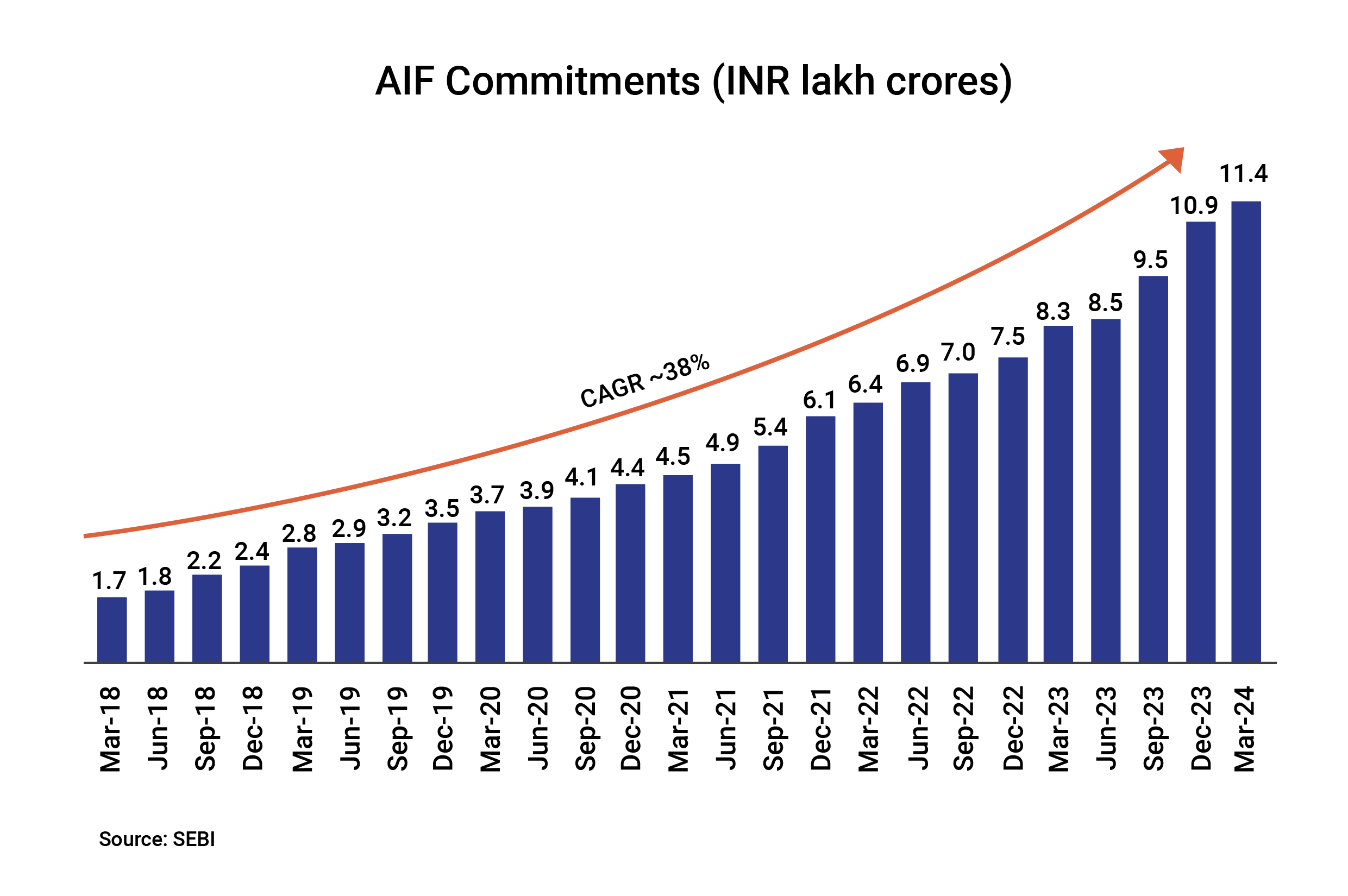
India’s AIF industry has come a long way since its inception a decade ago. What is striking about the industry is its pace of growth. The commitments raised, which denotes amount clients are willing to invest in AIFs, surpassed INR 7 lakh crore within a decade (in the Sep 2022 quarter). In contrast, the Mutual Fund industry achieved an AUM of the same level over four decades in mid-2009, after the first scheme (US-64 by UTI) was launched in 1964. Between March 2018 and 2024 or over a period of six years, AIF commitments witnessed an annual growth of ~38%.
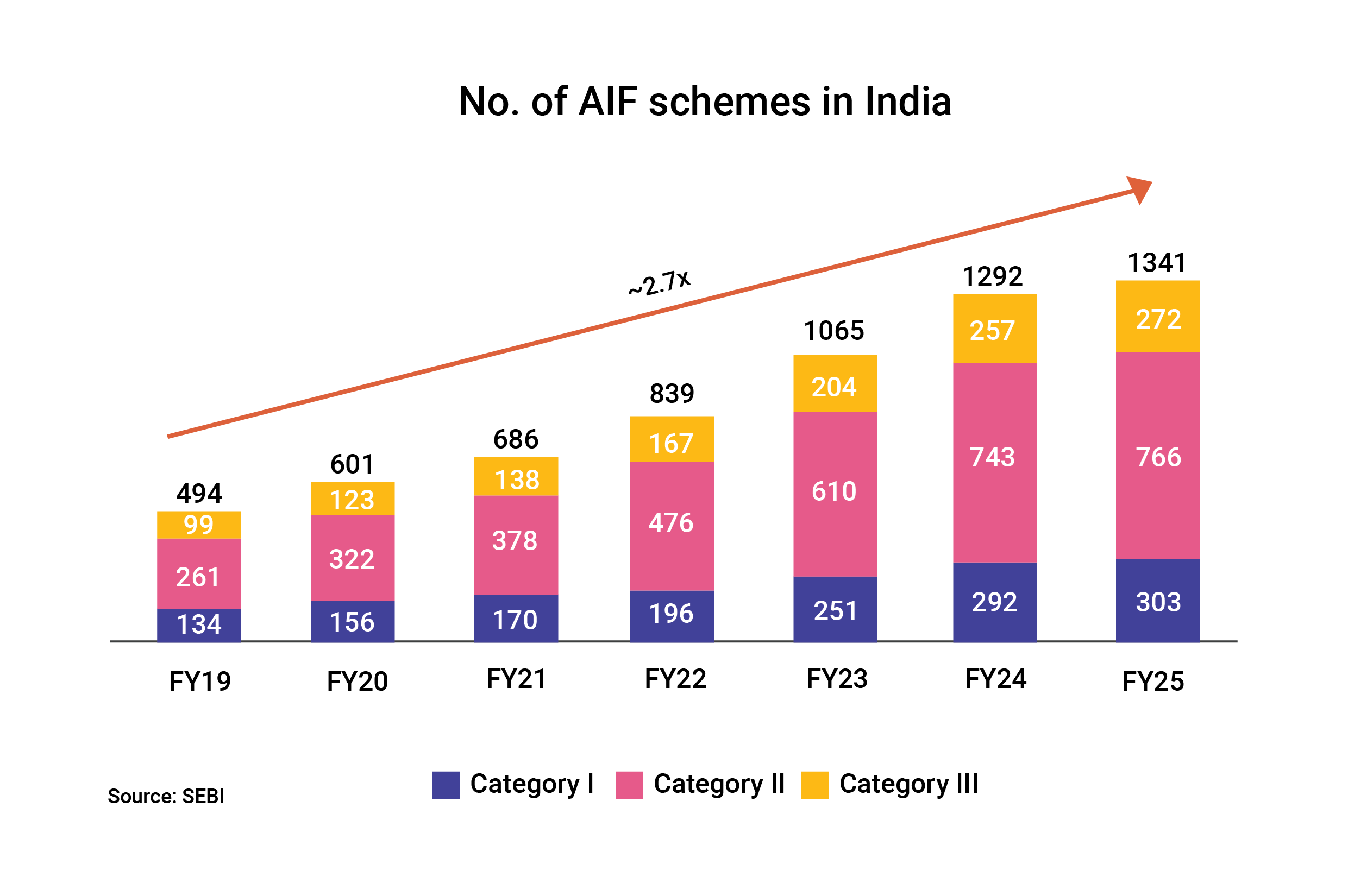
Due to increasing awareness and recognition of AIFs as a preferred alternative investment vehicle, the growth in the number of schemes was phenomenal with new entrants and demand for new schemes. As depicted in the chart below, the number of schemes increased nearly threefold between FY19 and FY25 (as of June 2024).
The major factor that is driving the growth in AIFs is their low correlation to public markets, regulatory support, and their ability to provide a diversified investment portfolio, mitigating the risk profile of investors. Hence, high net-worth individuals (HNIs) and family offices are increasingly preferring AIFs instead of limiting themselves to asset classes like traditional equity and bonds to diversify risk in their portfolio. Higher volatility in the market for traditional investments due to consequences of black swan events like Covid-19, geo-political tensions, etc., and other macroeconomic factors like inflation have been a major concern. Given these issues, AIFs fit well into the criteria with higher risk-adjusted returns and inflation hedging.
Huge room for growth
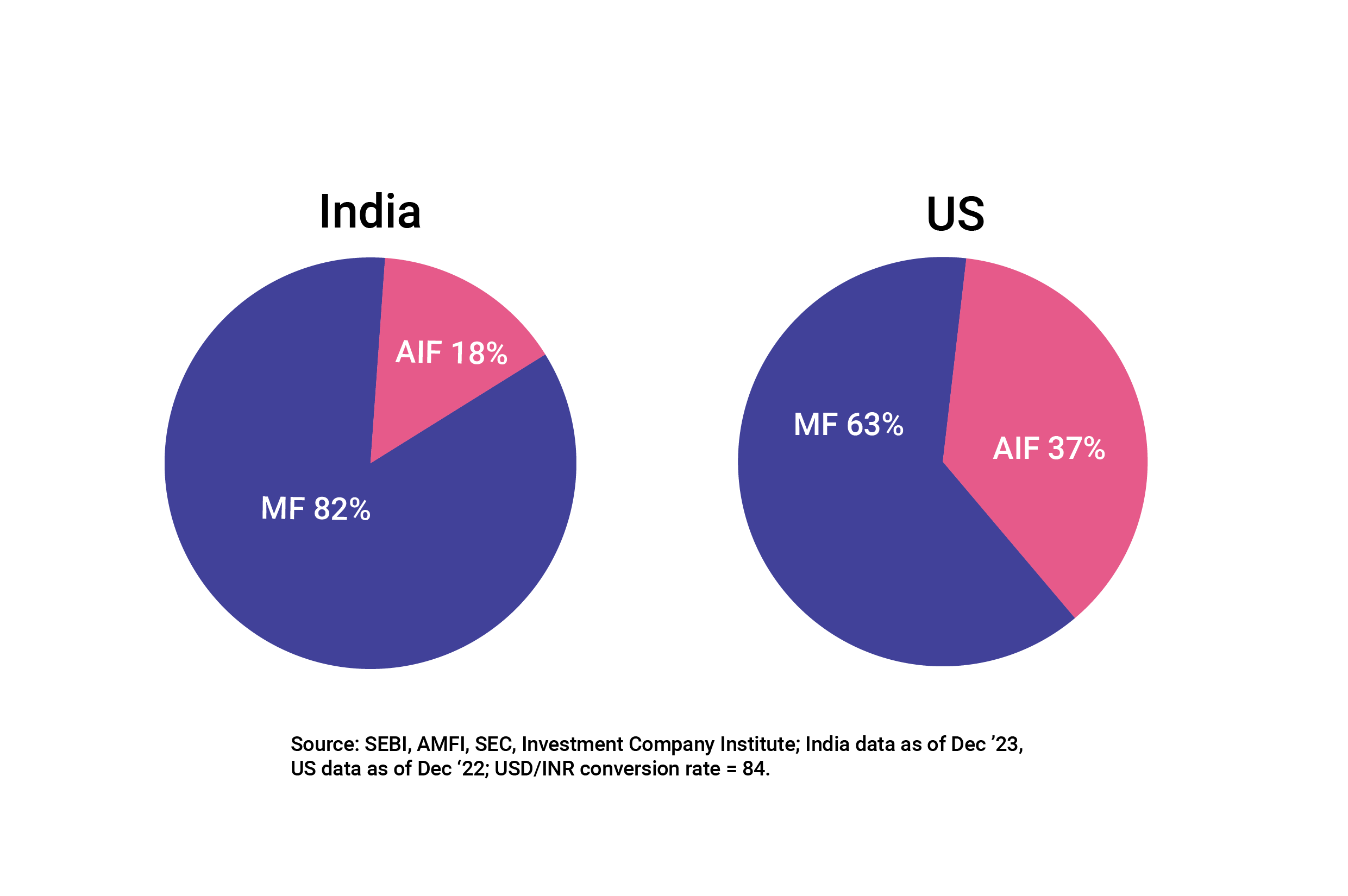
Despite the rapid growth in the number of schemes and commitments, the AIF industry is yet to mature to a much larger size given the lesser restrictions it enjoys with respect to investment in the unlisted universe compared to mutual funds and the risk-return spectrum it offers. Its potential to grow can be gauged from its share in the overall asset size of pooled investment vehicles in the country, which is much smaller than what it is in other developed countries.
The engines of growth
i) HNI base
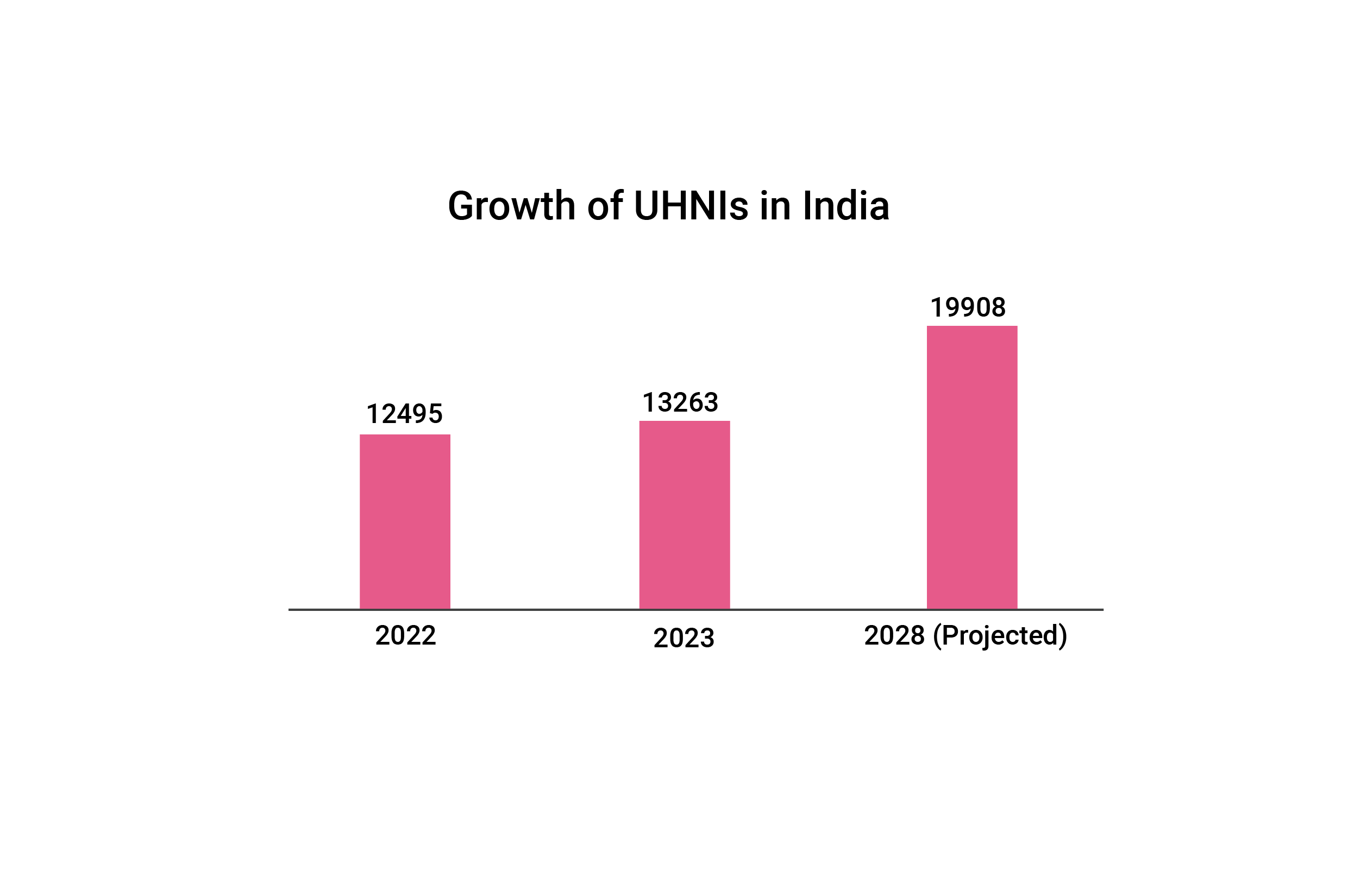
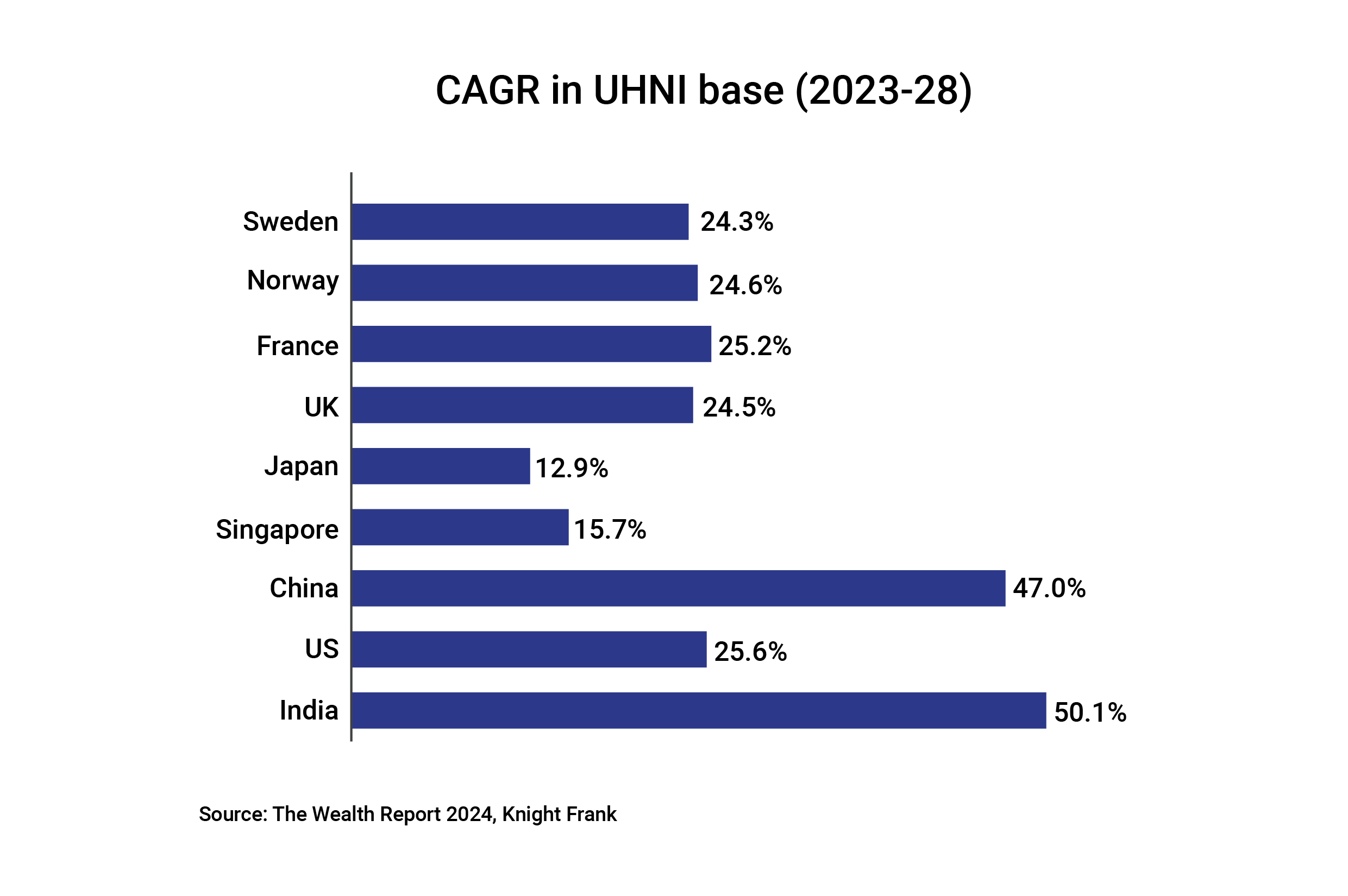
Is there inherent strength to support the growth potential of AIFs in India? There is indeed a significant pool of wealthy individuals who all can be the target group to tap the underpenetrated market. As per a recent report, the number of ultra-high net-worth individuals (UHNIs) in India, with a net worth of over US$30 million, is expected to witness the highest growth (~50%) for any country across the world between 2023 and 2028.
ii) Accreditation
The Accreditation Investors framework, initiated by SEBI in 2021, holds the key to the paradigm shift in the AIF industry. This is primarily because the market watchdog has allowed Accreditation Investors under the framework to invest with ticket sizes that are lower than the stipulated minimum amount of INR 1 crore. The premise of the framework is based on a class of investors, who are equipped with good knowledge about the risk and returns of financial products, have the ability to make informed decisions about their investments, and meet certain income eligibility criteria.

Certificates for Accredited Investors would be provided by Accreditation Agencies, which can be subsidiaries of stock exchanges or depositories (National Securities Depository Limited or Central Depository Services Limited) or any other institution that meets the eligibility criteria. The relaxed criteria in minimum investment will be able to unlock the potential of the AIF industry by enabling investors to enter the market who were previously backing off due to higher ticket sizes.
iii) Digitisation
Some mutual funds have a fully digitised onboarding process which allows seamless transaction processing with minimal Turnaround Time (TAT). Given the potential growth of AIFs due to the inclusion of smaller ticket size investors with an Accredited Investor framework, there is a need for digitising the onboarding process for AIFs.
We suggest Accreditation Agencies to consider building a digital infrastructure for AIFs for the onboarding process that would
Reduce TAT to issue Accredited Investor certificate to the minimum.
Remove ambiguity between investors and Accreditation Agencies by providing a standardised format of the Net Worth certificate.
iv) Listing of fund units
The development of a secondary market for AIFs is essential to ensure liquidity in the AIF industry. As per Section 14 of SEBI’s AIF regulations, units of close-ended AIFs may be listed on a stock exchange subject to a minimum tradable lot of INR 1 crore, after the final close of the fund or scheme.
The listing of AIF units would
Ensure liquidity by allowing investors an easy exit opportunity (subject to KYC) due to dematerialisation and enabling price discovery in a demand-supply mechanism.
Create a more enabling environment for Pension Funds, which are more inclined to investing in listed securities according to PFRDA guidelines, to invest in AIF units.
In this regard, clear operational guidelines should also be established by the regulator with respect to standardisation of contribution agreements, handling of fractionalised units, tradable lot sizes for Accredited Investors, and involvement of merchant bankers in the listing process.
#TheContext by IVCA – features opinion makers from the alternate investing industry with strong focus on India as an investment destination. Watch this space for new announcements in the sector, viewpoints on investment themes, emerging trends, economic reports, analysis and latest industry insights.